BAPETEN Holds Public Consultation on the Draft Presidential Regulation of the Republic of Indonesia on National Policy and Strategy for the Management of Radioactive Waste and Spent Nuclear Fuel
Kembali 09 Oktober 2025 | Berita BAPETEN | 1158 lihat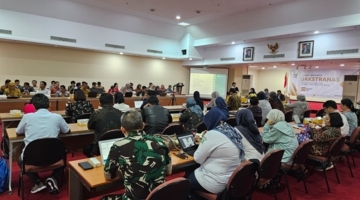
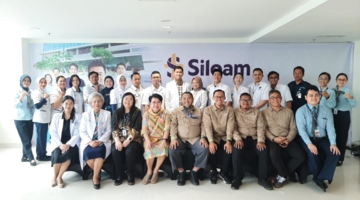
The Nuclear Energy Regulatory Agency (BAPETEN) organized a Public Consultation on the Draft Presidential Regulation of the Republic of Indonesia on the National Policy and Strategy for the Management of Radioactive Waste and Spent Nuclear Fuel (Jakstranas LRA-BBNB) on October 9th 2025, conducted both online and onsite at the BAPETEN Office in Jakarta.
The event was attended by senior officials within BAPETEN, as well as representatives from ministries/agencies, industry, associations, and healthcare facilities. Representatives from the Ministry of Health of the Republic of Indonesia, the Ministry of Industry of the Republic of Indonesia, and the National Research and Innovation Agency (BRIN) were also present as key speakers.

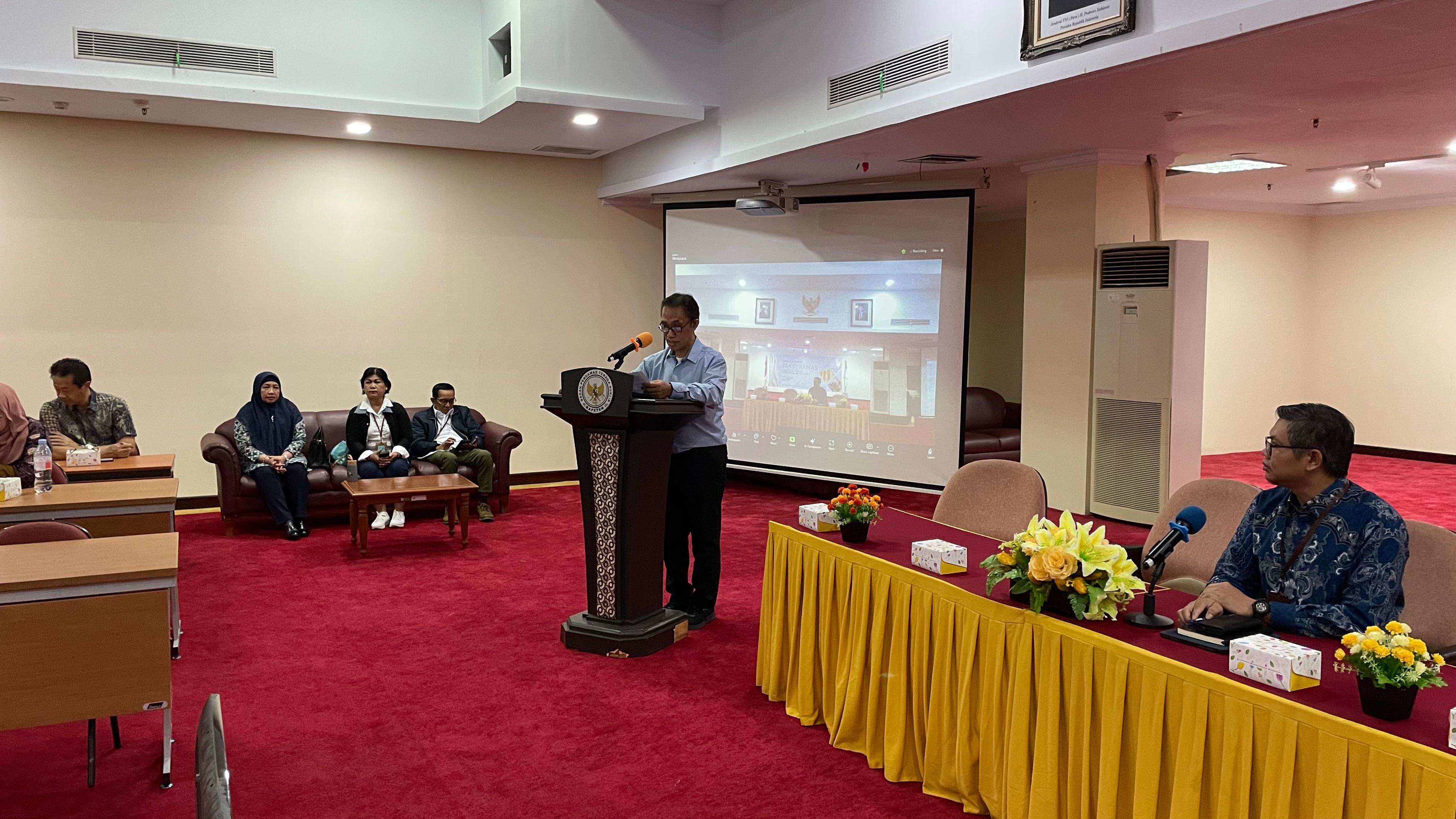
Director of Regulation of Radiation Facilities and Radioactive Materials (DP2FRZR), Mukhlisin, opened the event, followed by remarks from the Deputy Chairman for Nuclear Safety Assessment, Haendra Subekti.
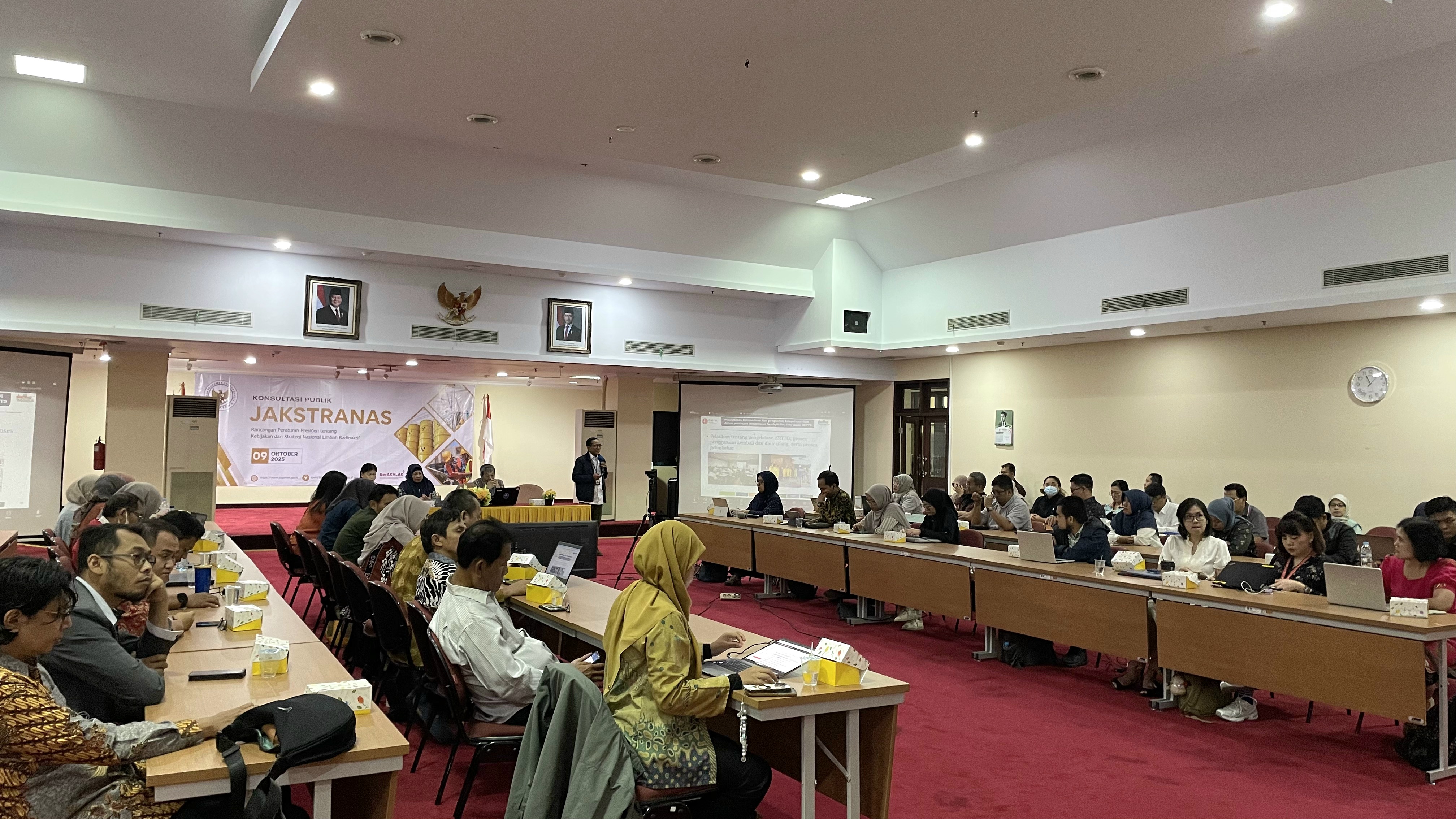
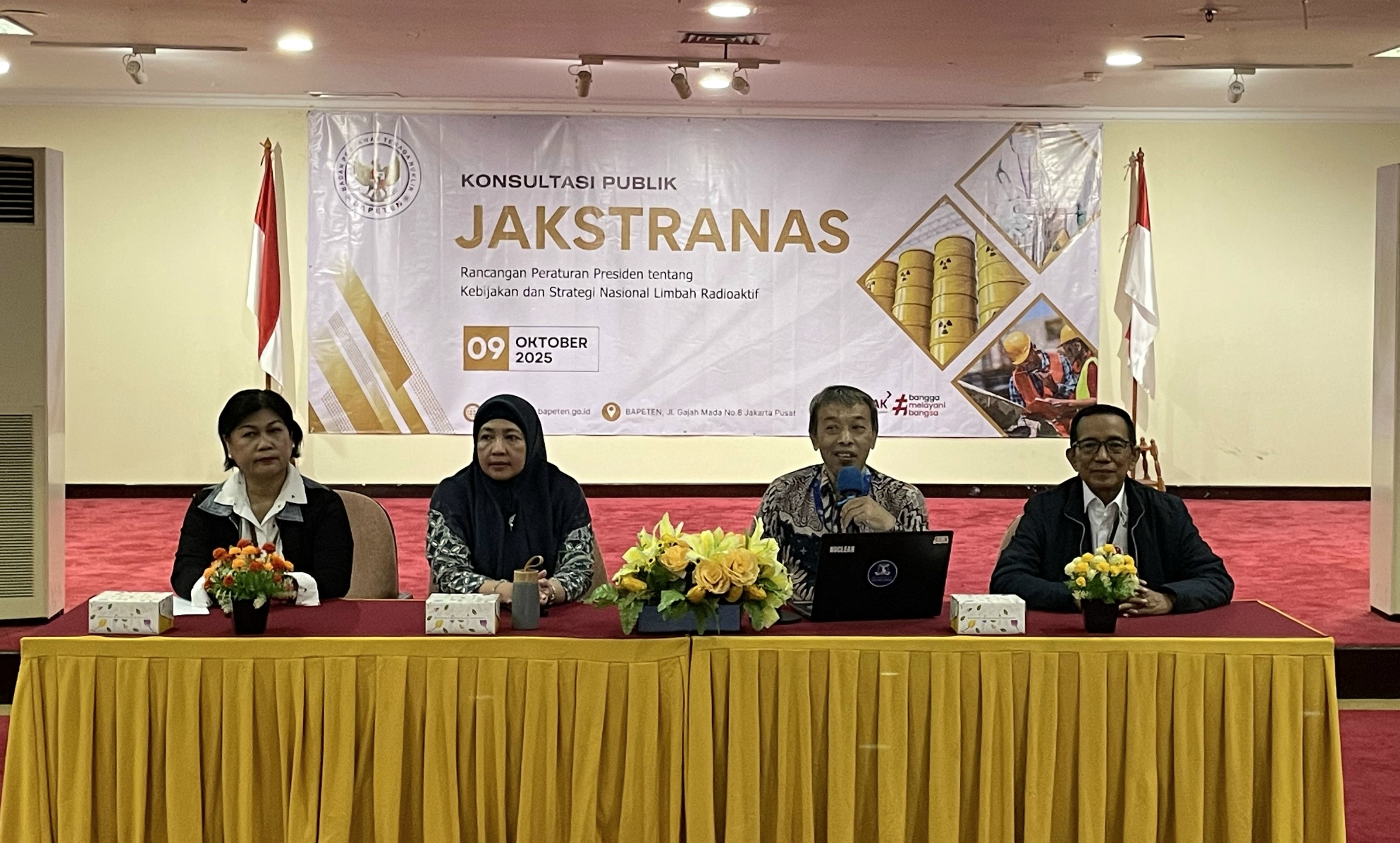
Four speakers discussed aspects related to health, industry, research, and regulation. The four main presentations delivered in this forum were as follows:
- The Ministry of Health of the Republic of Indonesia, represented by Dessy Paiman, presented strategies for supervising the management of radioactive waste at healthcare facilities. The Ministry emphasized the importance of a priority risk-based approach by focusing supervision on high-risk healthcare facilities, integrating data and reporting with BAPETEN, strengthening human resources through training and certification in environmental health supervision in the radiation sector, as well as effective inter-agency collaboration.
- The Ministry of Industry of the Republic of Indonesia, represented by Andriati Cahyaningsih, delivered material on the Implementation of Green Industry Principles in the Steel Processing Industry to Anticipate Radioactive Contamination. She explained the standards and policies of the green industry, which aim to enhance resource efficiency and environmental functions through improved resource efficiency, the use of alternative raw materials, the utilization of new and renewable energy, the application of circular economy principles, emission reduction, and waste control. The presentation also elaborated on the implementation of green industry practices in steel processing, focusing on raw materials, products, and waste, as well as the potential and handling of radioactive contamination in the steel industry.
- The National Research and Innovation Agency (BRIN), represented by Suryantoro, presented BRIN’s strategies for managing radioactive waste and spent nuclear fuel. BRIN emphasized strengthening waste management infrastructure, accelerating the handling of legacy waste, enhancing coordination, increasing public engagement in supporting waste management, improving the availability and competence of human resources, developing integrated information systems, and advancing research and innovation related to management, reuse, and recycling.
- BAPETEN, represented by Anet Hayani, presented the substance of the Draft Presidential Regulation on the National Policy and Strategy for the Management of Radioactive Waste and Spent Nuclear Fuel (Jakstranas LRA-BBNB), which will serve as a national guideline for all ministries and institutions in formulating strategic plans in the field of radioactive waste and spent nuclear fuel management. This policy encompasses four main pillars: the structuring of radioactive waste management, the structuring of spent nuclear fuel management, and the application of circular economy principles for disused sealed radioactive sources and spent nuclear fuel.

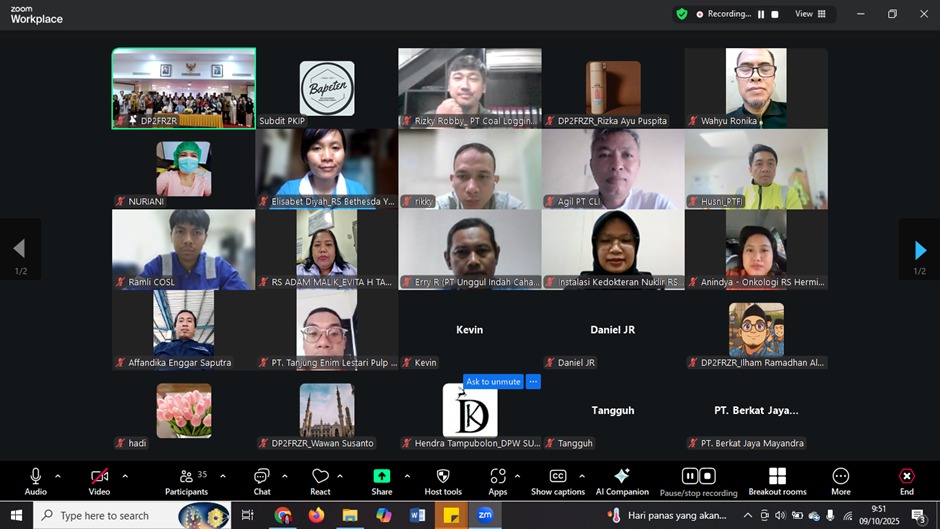
The Jakstranas draft outlines the direction of national policy through 2045, divided into four implementation phases: 2026–2029, 2030–2035, 2036–2040, and 2041–2045. The national strategy is applied in the health sector, industry, nuclear installations, and radioactive waste originating from activities outside regulatory oversight.
The event concluded with an interactive discussion session moderated by Soegeng Rahadhy, Activity Coordinator for the Health, Industry, and Research Regulatory Function Group, followed by the closing remarks delivered by Mukhlisin. [BHKK/SP/YL]







Komentar (0)