BAPETEN Highlights the Importance of Public Awareness on Nuclear Power Plant Safety and Benefits in the 2026 Nuclear Capacity Building Program
Kembali 22 Januari 2026 | Berita BAPETEN | 1430 lihat
Efforts to strengthen public understanding and enhance national human resource readiness in anticipation of Indonesia’s first Nuclear Power Plant (NPP) continue to gain momentum. These efforts were reflected in the Nuclear Capacity Building Awareness 2026 event, held on 22 January 2026 in Surabaya, through a collaborative initiative involving the Institut Teknologi PLN (ITPLN), Institut Teknologi Sepuluh Nopember (ITS), and the Research and Development Center of PT PLN (Persero).
Under the theme “Welcoming Indonesia’s First Nuclear Power Plant as a Net Zero Emission Solution in Alignment with the 2025–2034 RUPTL,” the event served as a strategic forum to promote informed and objective public awareness on nuclear energy utilization, developments in NPP technology, as well as nuclear safety and regulatory frameworks.
Opening the event, General Manager of PLN Research and Development Center, Mochamad Soleh, emphasized the importance of fast tracking the preparation of an NPP operating entity. “One NPP unit requires approximately 200 core personnel. Our initial target is the development of a 500-megawatt nuclear power plant to be located in West Kalimantan and Bangka Belitung,” stated Soleh.
Meanwhile, Vice Rector IV of the Institut Teknologi Sepuluh Nopember (ITS), Prof. Agus Muhamad Hatta, highlighted the readiness of higher education institutions to support research and development efforts. According to him, NPP are inherently multidisciplinary projects involving electrical engineering, mechanical engineering, physics, as well as safety and automation systems. Vice Rector IV for Cooperation and Business Affairs of the Institut Teknologi PLN (ITPLN), Dr. Ahsin Sidqi, added that nuclear technology has become increasingly adaptive to evolving energy demands, including for industrial scale applications.
The event featured speakers from regulatory institutions, including representatives of BAPETEN, as well as academics and practitioners. The speakers included Deputy Chairman for Nuclear Safety Assessment of BAPETEN Haendra Subekti, Prof. Rony Seto Wibowo from ITS, Ir. Heru Sriwidodo, M.M., IPU, serving as consultant and trainer, and Professor of Nuclear Engineering and Researcher Prof. Anhar Riza Antariksa.
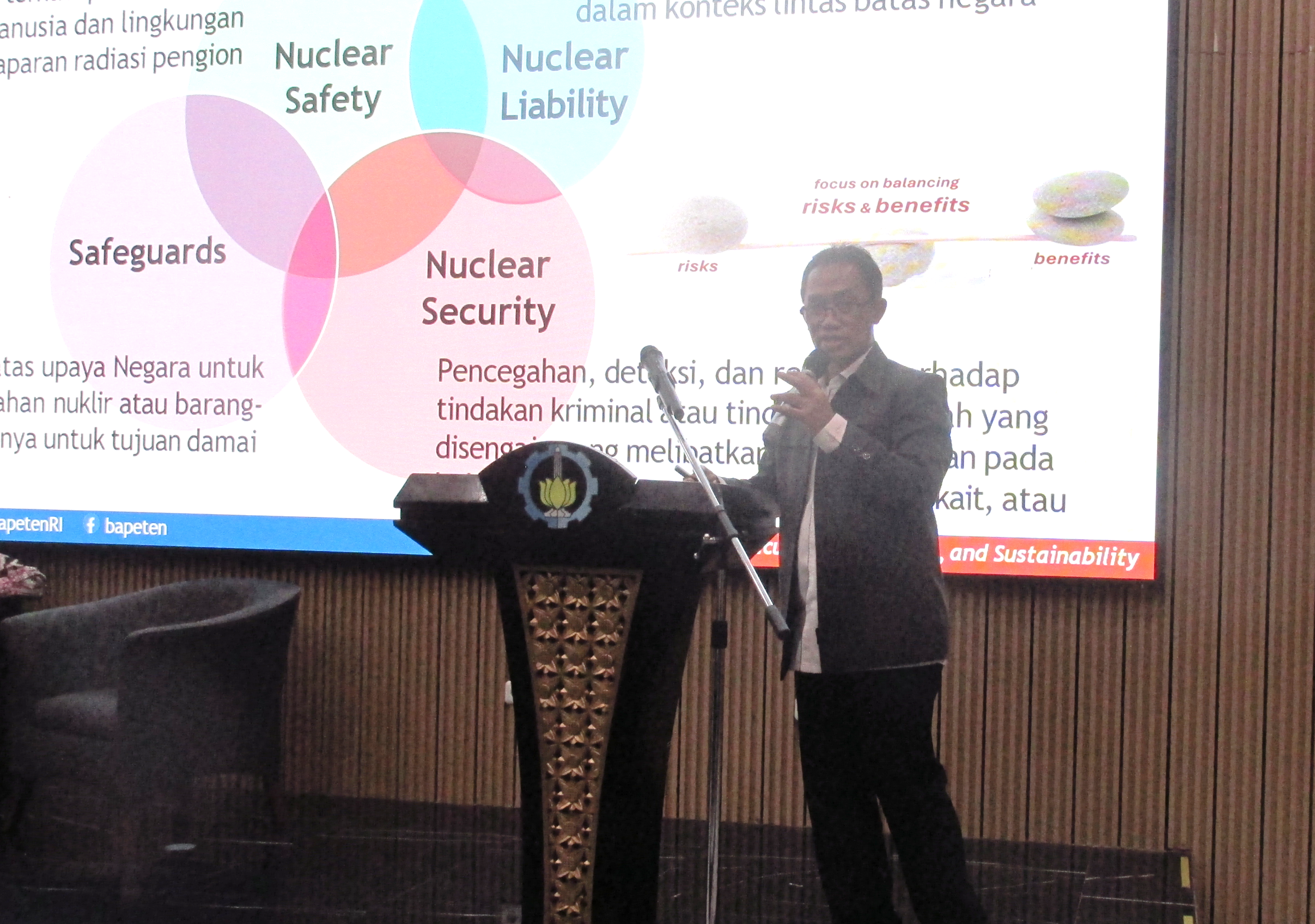
Haendra Subekti emphasized that the utilization of nuclear energy can only be carried out when all aspects of safety, security, and safeguards are fulfilled strictly and consistently. He explained that Indonesia has established a comprehensive national regulatory framework for NPP, covering all stages from pre-feasibility studies, site selection and approval, design approval, construction licensing, commissioning approval, to operation and decommissioning licensing. All of these stages are subject to BAPETEN’s oversight through licensing mechanisms, inspections, and pre-licensing services. In addition to national regulations, BAPETEN adopts the International Atomic Energy Agency (IAEA) safety standards as the primary technical reference in formulating regulations and supervising nuclear power plants. This approach ensures that the level of nuclear safety in Indonesia is aligned with international best practices.
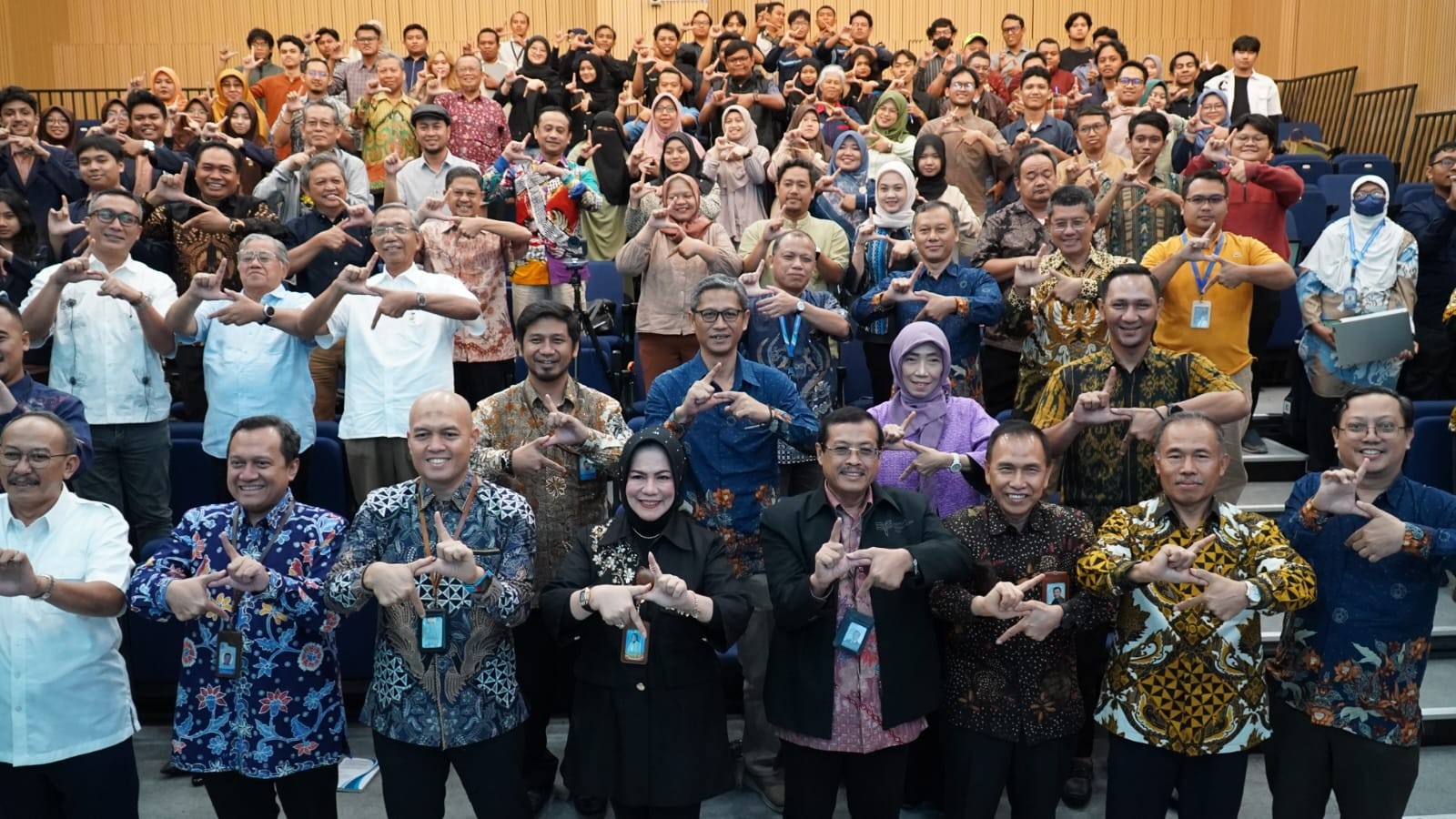
Public education and human resource capacity building are key elements in fostering public trust in the utilization of nuclear energy in Indonesia. Strengthening networks among universities to produce qualified human resources for nuclear power plant projects needs to be immediately realized through a clear roadmap and action plan, supported by relevant ministries and institutions as key stakeholders. Similar activities are planned to be expanded to various regions, including community groups and Islamic boarding schools, to broaden public discourse on nuclear energy in Indonesia. [BHKK/GP/HRUF]
/









Komentar (0)